
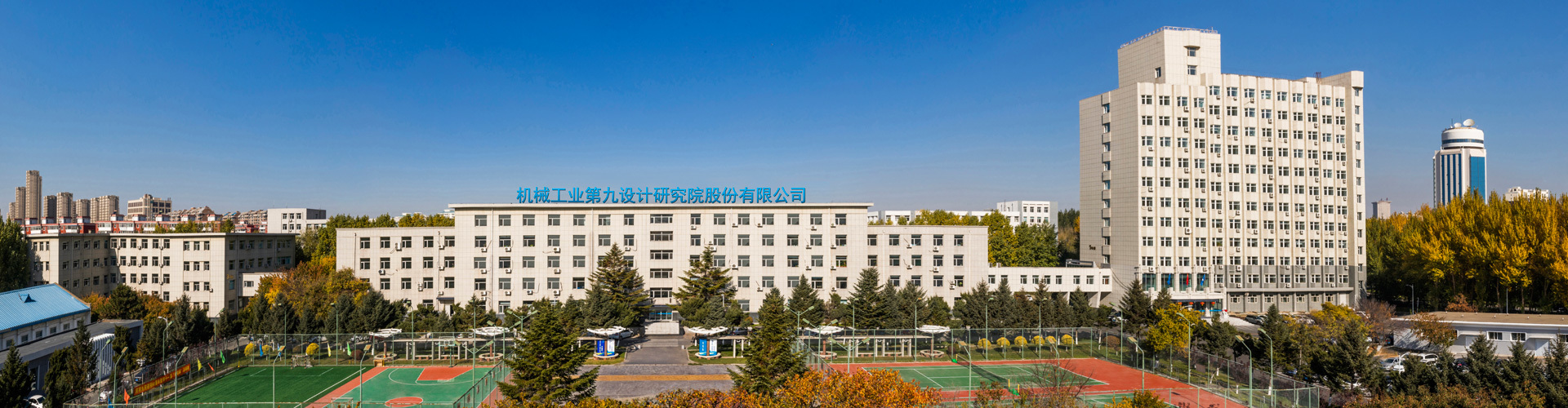
The masterpiece of the Ninth Design Institute of the Machinery Industry - the new base for Jiefang trucks.
Release time:
2012-04-23 15:57
On July 15, 2003, the groundbreaking ceremony for the new Jiefang truck base took place. The Ninth Design and Research Institute of Machinery Industry undertook the engineering design task, adding a significant chapter to the design history of the Ninth Institute.
This project not only has a large investment scale, many uncertainties, and a short design cycle, but also involves complex engineering design, high technical requirements, and numerous technical challenges. This is a common sentiment among the project design leaders at the Ninth Institute. In military terms, 'speed is of utmost importance,' and economic construction also requires speed; victory in speed translates to tactical victory. Achieving speed in engineering design requires courage and skills to challenge traditional design methods. The people of the Ninth Institute broke away from the sequential design and construction processes, conducting design and construction concurrently. Engineers from various disciplines coordinated closely, repeatedly optimizing design elements and fiercely competing for design progress, fully demonstrating FAW Group's comprehensive independent engineering design capabilities in the automotive industry, as well as showcasing the strong modern design concepts and service awareness of the Ninth Institute's personnel. The Ninth Institute created its own miracle and also created FAW speed.
"Jiefang" base is the source of China's automotive industry and is also FAW's 'root.' To ensure that FAW's towering tree flourishes with abundant branches and leaves, we must make our 'roots' thicker and stronger! The Ninth Institute designed a modern truck production line with internationally advanced standards on 250,000 square meters of land in the western part of FAW's old factory area. The new welding, painting, and assembly processes complement the new engine, transmission, and axle assembly projects, forming a new development symphony for Jiefang Company and enabling FAW Group to take solid steps on the path of independent brand open development. The construction of the new Jiefang base belongs to a technical transformation project. The Ninth Institute began participating in its initiation and planning in 2000, completed all feasibility studies and project proposals in the first half of 2001, and established a project command team led by former FAW leaders in October of the same year.
The new Jiefang truck base has an annual production capacity of 100,000 medium and heavy trucks, making it the largest truck project in China and even worldwide. It plays a crucial role in FAW's 'three transformations' construction. The Ninth Institute undertook the design of five major workshops: cab welding, painting, chassis painting, chassis assembly, and complete vehicle assembly; as well as nine sub-projects including stamping, axle assembly, 6DE engine assembly, and Deutz engine assembly. During more than three years since the establishment of the Jiefang new base project team, everyone at the Ninth Institute united as one and spared no effort to equip the Jiefang project team with a powerful lineup: three national research-level senior engineers, two second-level designers, and three department-level chief engineers. Under the premise of self-financing, the Ninth Institute sent personnel abroad multiple times for inspections and research; just on overseas expenses alone nearly one million yuan was spent. This ensured that the engineering design and construction of the new Jiefang base reached internationally advanced levels from process selection for major workshops and assembly lines to civil engineering and utility facilities.
In 2003, when the horn for construction at the new Jiefang base was fully sounded, due to various reasons, engineering design did not gain much time from early operations; however, the timeline for project design completion had already been locked in. The people of the Ninth Institute showcased their expertise through practical actions to prove their technical service capabilities to FAW. According to normal factory design procedures: designing process plans—preparing bidding documents—determining equipment contracting companies—equipment design—providing civil engineering utility design materials—civil engineering utility design—civil engineering utility construction—equipment installation debugging—production launch. In designing the cab painting workshop, to ensure project progress, personnel from the Ninth Institute broke conventional practices by synchronizing civil construction with equipment design methods, pioneering a new chapter in construction drawing design history. Synchronous construction required that civil utility designs be completed based solely on experience accumulation and scientific validation without prior equipment designs; this posed significant challenges as civil construction accuracy must meet process equipment usage requirements. The Ninth Institute organized technical forces for lean design, conducted multiple technical comparisons and economic analyses across over twenty versions of design plans, reported eight times to the painting command team, ultimately determining two bidding plans that laid a solid foundation for preparing bidding documents and civil utility designs for synchronous construction. Due to uncertainties in bidding factors, either version of bidding plans had potential for winning bids; however, which process equipment supplier would be ultimately chosen by the owner had not yet been finalized. The Ninth Institute formed two design teams according to both bidding plans to complete two sets of civil utility design drawings ensuring that regardless of which plan won the bid, civil engineering could proceed on schedule.
To ensure that civil utility designs do not interfere with future equipment winning companies during implementation, the Ninth Institute specially created two 1:50 workshop models to verify the reliability of operational designs with physical objects. This single effort saved over a year in construction time for the medium truck base. On May 20, 2003, Essmann Company signed a contract for equipment bidding; just two days later on May 22, civil engineering work for the painting workshop broke ground.
During China's 'First Five-Year Plan' to 'Sixth Five-Year Plan,' the Ninth Institute completed planning, designing, and renovation expansion work for major automotive industrial bases such as FAW, Dongfeng Motor Corporation (DFM), Sinotruk (CNHTC), Beijing Automotive Group (BAIC), Tianjin Automotive Group (Tianjin), and Nanjing Automotive Group (Nanjing), making immeasurable contributions to China's automotive industry development; it is hailed as 'the cradle of automotive factory design in China.' The Ninth Institute is one of China's top hundred design institutes and an advanced enterprise in national 'Fifteen' technological innovation. With years of experience participating in major domestic automotive group factory development projects' designs and engineering management experiences under their belt, personnel from the Ninth Institute completed civil engineering designs for the new Jiefang base on schedule. The error margin between construction drawings and actual operations was not allowed to exceed 3%, while in this project it was less than 1%, saving owners significant time and investment. Moreover, this large-scale painting project conducted synchronous civil utility designs before equipment bidding while achieving such high-quality designs made it a first in China.
In designing projects at the new Jiefang base, personnel from the Ninth Institute embodied traditional spirits such as 'simple style, consideration for overall situation, diligence in learning,' and 'selfless dedication.' Their professional ethics of selfless dedication and exceptional service deeply moved users. At that time's project commander Cui Mingwei once said: Without the Ninth Institute there would be no today's medium-heavy truck base at Jiefang. To accelerate construction across four major bases all personnel at the Ninth Institute sacrificed personal time for collective benefit; voluntarily working overtime became not just an individual act but a collective behavior among all engineering designers.
Xu Chengde is a senior architect at the architectural engineering branch of the Ninth Institute. Since graduating from Tsinghua University and being assigned to work at the Ninth Institute over his thirty-year career there he has been awarded outstanding Communist Party member honors twenty times and advanced worker model honors ten consecutive times; he regards FAW's factory development career as more important than life itself. As chief engineer for architectural engineering and chief designer for four projects within FAW's medium-heavy truck level projects he has completed feasibility studies for nine factory projects with sixteen sub-items including cab painting workshop renovations at FAW's body plant as well as modifications at FAW's Four Rings Engine Plant along with product development projects at Fawer Automotive Components Co., Ltd., while also undertaking preliminary designs for two factory projects with four sub-items along with two sets of construction drawings for four sub-items. To meet extraordinary requirements for quality and progress he worked overtime until midnight every day during Spring Festival holidays despite suffering from erosive gastritis accompanied by high fever. On March 11th at 2 AM he collapsed in his office; his leaders forcibly sent him to hospital where he escaped after three days eager to return to catch up on design progress only to collapse again in hospital corridors. His colleagues scolded him saying he was 'playing with his life,' but he replied: 'I may be dying but project progress is more important than life.'
The people of the Ninth Institute have completed the engineering design and construction technical service tasks for the new Jiefang truck base with high efficiency and quality, after a rare historical battle. They have contributed their wisdom and efforts to enhance the market competitiveness of FAW's medium and heavy-duty trucks and made outstanding contributions to achieving FAW's production scale of one million vehicles. They have demonstrated the core concept of the Ninth Institute, which is 'to regard user needs as our own responsibility and to create competitiveness for users,' to all those who care about and support FAW's development.
In July 2005, the new Jiefang base was put into operation, and the process equipment level and production quality control level of Jiefang trucks reached the standards of internationally advanced truck manufacturing enterprises, with the production capacity of a single product being the highest in the world. The successive completion and production of FAW's four major bases and the rapid enhancement of the group's economic strength have laid a solid foundation for achieving the new development goal of 'scale in millions, digital management, and international operations' for the new FAW. The Ninth Institute was born in this fertile ground of FAW, and the people of the Ninth Institute will always be loyal warriors in the development and construction of FAW factories.
Related News

Contact Information
Customer service telephone:+86 431 85125000
E-mail:marketing@cjxjy.com
Address: 1958 Chuangye Street, Changchun, China